5" vs 7" vs 10" vs 13" FPV Drones: Which Size for Which Mission
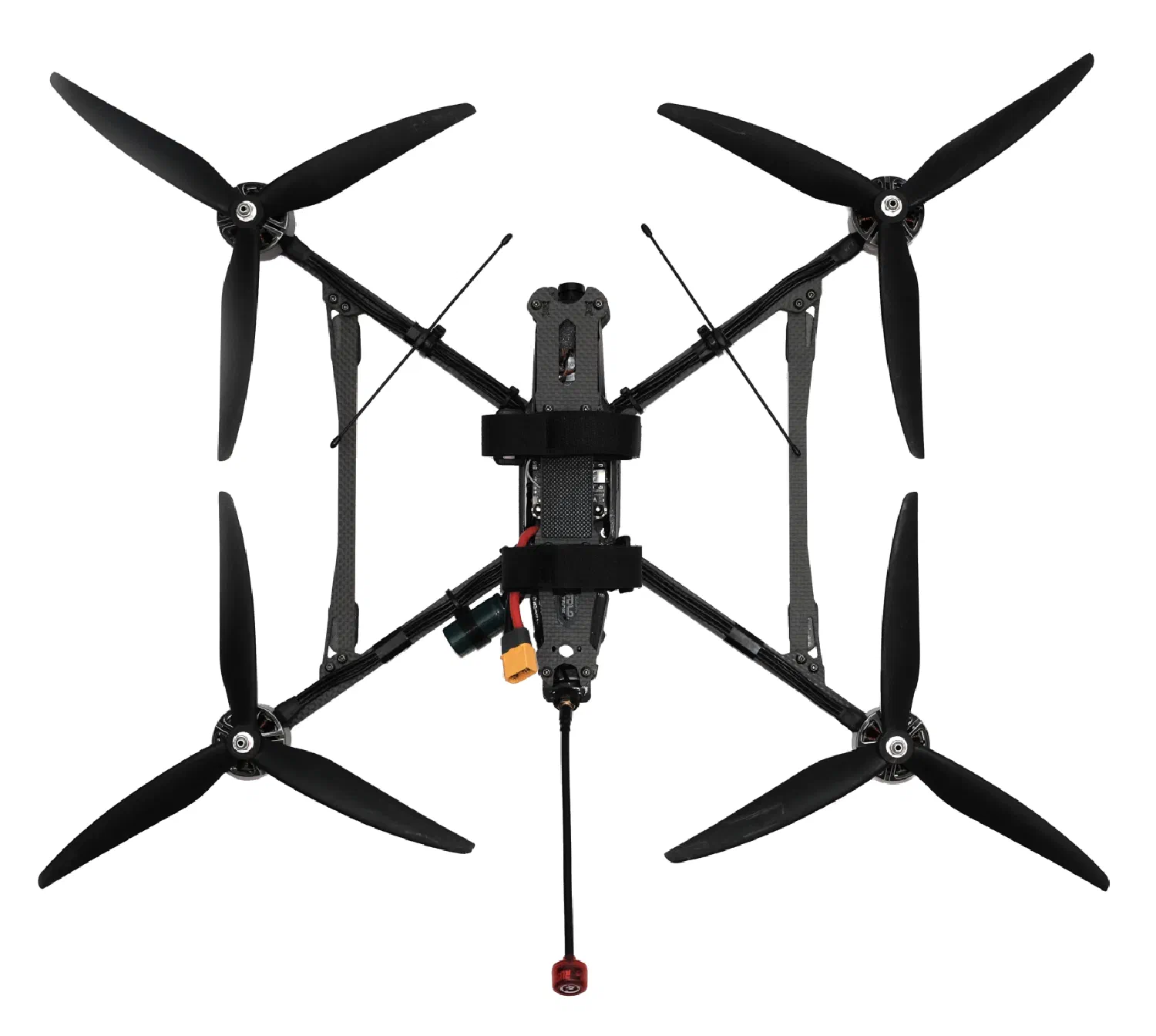
FPV drones are typically defined by propeller size, with 5", 7", 10" and 13" being the most common. Size directly affects payload capacity, range, flight characteristics and mission suitability. This guide breaks down each platform to help you choose the right drone for the mission, from pilot training to payload delivery and long-duration ISR.
Quick Answer
- 5" — best for training and entry-level flying. Durable, inexpensive to repair, and the standard platform for learning FPV fundamentals.
- 7" — best for lightweight missions and transitional training. Offers greater range and payload capacity than a 5", while retaining manageable flight characteristics. Often skipped in favour of a 10".
- 10" — best all-round operational platform. A strong balance of payload, range, repairability and parts availability, making it suited to a wide range of missions.
- 13" — best for heavy lift and long-duration ISR. Offers the highest payload capacity and endurance, at the cost of size, weight, cost and portability.
5" FPV Drones
5" drones are the entry point into FPV flying. They are small, durable and inexpensive to repair, making them ideal for pilots learning the fundamentals and building confidence through hands-on flying.
- Typical use: Pilot training, simulator-to-real transition, basic manoeuvre practice
- Payload: Minimal — not designed to carry meaningful payloads
- Strengths: Durable, quick to repair, low cost per unit, excellent parts availability
- Limitations: Limited range, flight time and payload capacity
For any organisation building an FPV training pipeline, the 5" is the natural starting point.
7" FPV Drones
7" drones bridge the gap between training and operational platforms. They retain much of the manageable handling of a 5" while providing greater range and capacity for lightweight payloads.
- Typical use: Lightweight reconnaissance, extended training, basic payload trials
- Payload: Around 1–2kg, including IR/thermal systems
- Strengths: Good flight characteristics, increased range and payload capacity, relatively easy to fly
- Limitations: Limited capacity for heavier payloads or tactical systems
A 7" can be a natural progression for pilots who have mastered a 5" and require greater range or a lightweight sensor payload. However, many operators move directly from 5" to 10".
10" FPV Drones
10" has become a highly versatile platform for modern operational FPV work. Pilots familiar with a 5" or 7" can transition to a 10" with relatively little additional training, as the underlying flight characteristics remain familiar.
- Typical use: General operational use, long-range flight, payload delivery, ISR and tactical missions
- Payload: Around 1–5kg, including IR/thermal systems
- Strengths: Strong parts availability, straightforward repair, consistent manufacturing and adaptable mission configuration
- Limitations: Not optimised for the heaviest payloads or longest-duration missions
For organisations looking to standardise on a single operational platform, 10" offers one of the strongest balances between payload, range, repairability and logistical simplicity.
13" FPV Drones
13" (X-class) drones are designed for heavy lift and long-duration flight. They trade portability and unit cost for increased payload capacity and endurance.
- Typical use: Heavy payload delivery, long-duration ISR and extended-range missions
- Payload: 5kg+, including IR/thermal systems
- Strengths: Highest payload capacity and endurance across the range, with multiple configuration options
- Limitations: Larger footprint, higher cost, reduced portability and more demanding handling
Where a mission genuinely requires heavy payload capacity or extended flight time, a 13" platform provides the capability required. However, its size and cost make it less practical for large-scale deployment than a 10".
Comparison at a Glance
| Size | Best For | Payload | Training Difficulty | IR/Thermal |
|---|---|---|---|---|
| 5" | Pilot training | Minimal | Easiest | Yes |
| 7" | Light recon, transitional training | 1 - 2kg | Easy | Yes |
| 10" | General operational use | 1 - 5kg | Easy (after 5"/7") | Yes |
| 13" | Heavy lift, long-duration ISR | 5kg+ | Moderate | Yes |
Which Size Should You Choose?
- Building a training pipeline? Start pilots on 5", with progression to 7" or directly to 10" once the fundamentals are established.
- Need one platform for most missions? 10" provides the strongest overall balance of payload, range, repairability and supply chain resilience.
- Need heavy payload or long endurance? 13" is purpose-built for these requirements.
- Running a mixed fleet? A combination of 5"/7" training platforms and 10"/13" operational platforms allows each drone to be matched to the task.
FAQ
What size FPV drone is best for beginners?
5" drones are the standard training platform — durable, inexpensive to repair and well suited to learning fundamental FPV skills.
What’s the difference between a 10" and 13" FPV drone?
A 10" is designed as a versatile operational platform, balancing payload, range, repairability and availability. A 13" provides greater payload capacity and endurance, but is larger, more expensive and less portable.
Do all FPV drone sizes support thermal or IR cameras?
Yes. 5", 7", 10" and 13" platforms can all be configured with IR/thermal imaging. Larger platforms can accommodate heavier or more capable sensor packages more easily.
Does flight training transfer between sizes?
Largely. Skills transfer well between 5", 7" and 10" platforms, although pilots will need to adapt to differences in size, weight and handling. A 13" requires greater adjustment due to its increased size and inertia.
Firefly UAV designs and manufactures FPV drones across the 5"–13" range, from pilot training platforms to heavy-lift operational systems, supported by UK-based manufacturing, engineering and training programmes.