ATAK Mesh Repeater
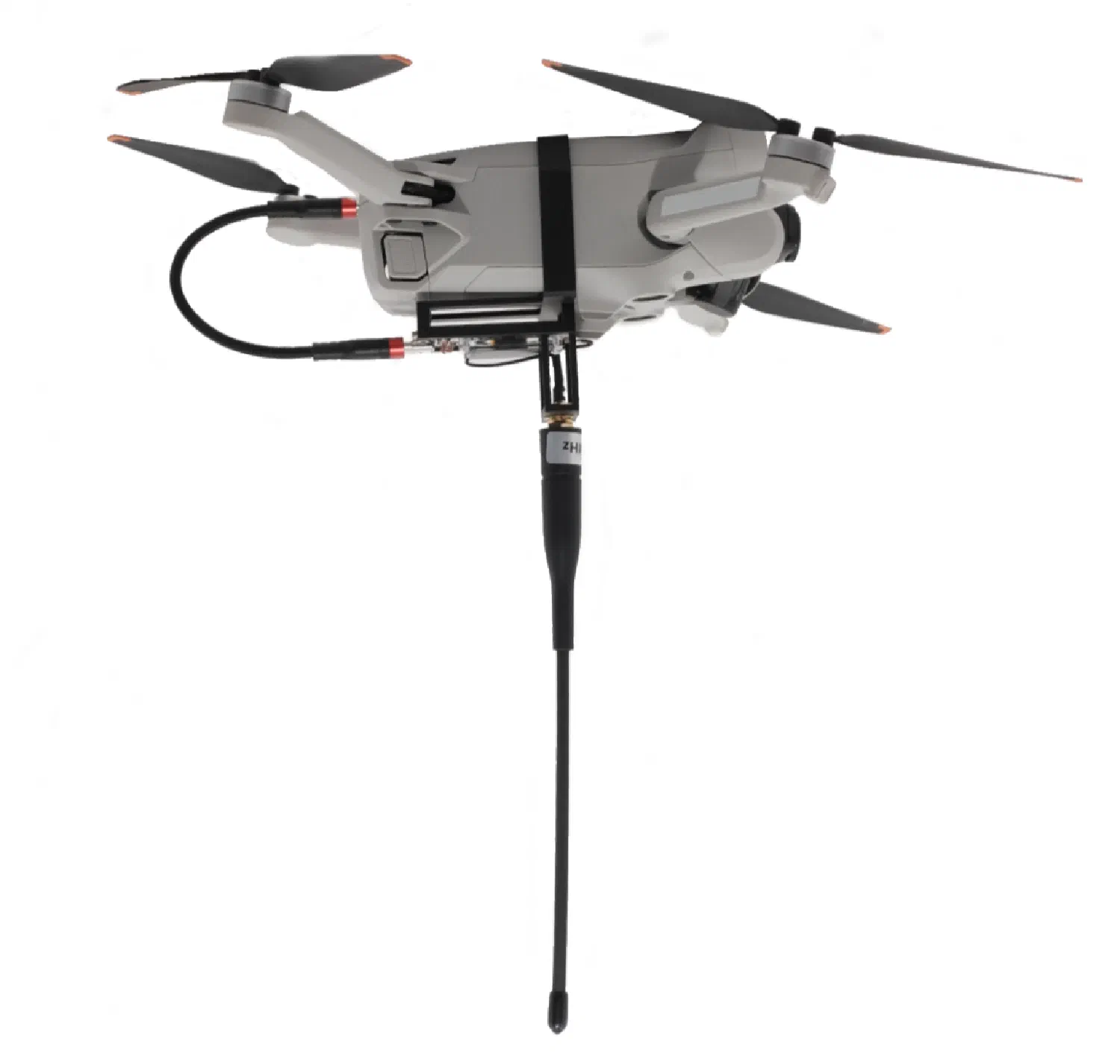
Ground teams using ATAK or CIVTAK depend on reliable position and messaging data. Terrain, buildings, vegetation and distance can quickly disrupt ground-based mesh networks.
Mounting a LoRa mesh node to a drone provides an elevated relay, improving line-of-sight between otherwise disconnected nodes and extending network coverage across the area of operations.
Using a drone for recon? Why not make it a node repeater as well to help the ground team!
Quick Answer
- The challenge: Ground-based LoRa nodes are affected by terrain, buildings, vegetation and antenna height.
- The solution: Lift the mesh node into the air to provide an elevated relay and improved line-of-sight.
- The advantage: The same drone can carry a camera, combining communications extension with aerial situational awareness.
- No fixed infrastructure: The system operates independently of cellular, Wi-Fi and other existing network infrastructure.
Why Ground-Based Mesh Can Struggle
Meshtastic and MeshCore use low-power LoRa radios to exchange small packets such as position data, messages and telemetry across a mesh network. This makes them particularly useful for teams operating where conventional communications infrastructure is unavailable or unreliable.
However, LoRa performance is heavily influenced by line-of-sight.
A node operating at ground level can be masked by terrain, buildings, woodland and other obstacles. Adding more ground nodes can improve coverage, but each additional node introduces equipment, power and deployment requirements.
Increasing antenna height can often provide a simpler solution.
Put the Mesh in the Air
An airborne node provides a significantly clearer line-of-sight to surrounding ground nodes. By positioning the relay above terrain and obstacles, a single airborne platform can bridge areas that would otherwise require multiple ground nodes.
- Typical use: Extending mesh coverage, bridging separated teams and overcoming terrain or structural obstructions
- Deployment: Quick-fit LoRa mesh module for compatible Mavic-type and FPV platforms
- Protocols: ATAK/CIVTAK, Meshtastic and MeshCore
- Strengths: Rapid deployment, improved line-of-sight and no fixed infrastructure
- Limitation: Coverage duration is limited by the flight endurance of the host aircraft
The node can be positioned where it provides the greatest network benefit and repositioned as the team moves.
More Than a Repeater
The airborne platform can provide more than communications extension.
Where the host aircraft is equipped with a suitable camera, the same asset can provide aerial situational awareness while maintaining the mesh relay.
This combines two capabilities in a single deployable platform:
- Communications: Elevated relay for ground-based mesh users
- Situational awareness: Aerial observation of the surrounding area
- Single asset: One aircraft providing both effects
- Integrated data: ATAK/CIVTAK users can continue to access position and messaging data within their existing Common Operating Picture
Deployment
Designed as a lightweight payload, the mesh module can be integrated onto compatible drone platforms without requiring a dedicated fixed installation.
- Airframe compatibility: Mavic-type platforms and FPV airframes
- Low power requirement: LoRa hardware requires relatively little power, minimising additional demand on the host aircraft
- Independent operation: No cellular, Wi-Fi or satellite infrastructure required
- Rapid deployment: Fit the module, deploy the aircraft and establish the airborne relay
Comparison at a Glance
| Approach | Coverage | Setup Time | Infrastructure Needed |
|---|---|---|---|
| Ground node | Limited by terrain / buildings | Minutes | None |
| Mast / static relay | Good from a fixed position | Longer | Physical mast or mount |
| Drone-mounted node | Elevated line-of-sight coverage | Minutes | None — airborne |
FAQ
Does the airborne node replace ground nodes? No. It complements them. Ground nodes provide the local mesh, while the airborne node can bridge coverage gaps and provide an elevated relay.
Which protocols does it support? The system is designed to support ATAK/CIVTAK, Meshtastic and MeshCore over compatible LoRa hardware.
Can it be fitted to any drone? Yes — just specify your drone and we provide the mount.
Does it require ground infrastructure? No fixed cellular, Wi-Fi or satellite infrastructure is required for the mesh itself. You still require your existing Meshtastic/MeshCore nodes.